

Alakazam's Archives: The "Nintedo" Misprint on the Most Mysterious Card in History
aop3d techAlakazam's Archives: The Ancient Mew Mystery
Welcome back to Alakazam's Archives, your premier source for the deepest cuts, rarest anomalies, and forgotten lore of the Pokémon Trading Card Game! Today, we are taking a trip back to the turn of the millennium, straight into the movie theaters of our childhoods.
We are looking at a card that felt like an actual artifact: a double-sided, fully holographic card covered entirely in unreadable runes. We are talking, of course, about Ancient Mew.
But while millions of kids spent hours trying to decode the mysterious symbols, they completely missed a massive, glaring English typo printed right at the very bottom of the card.
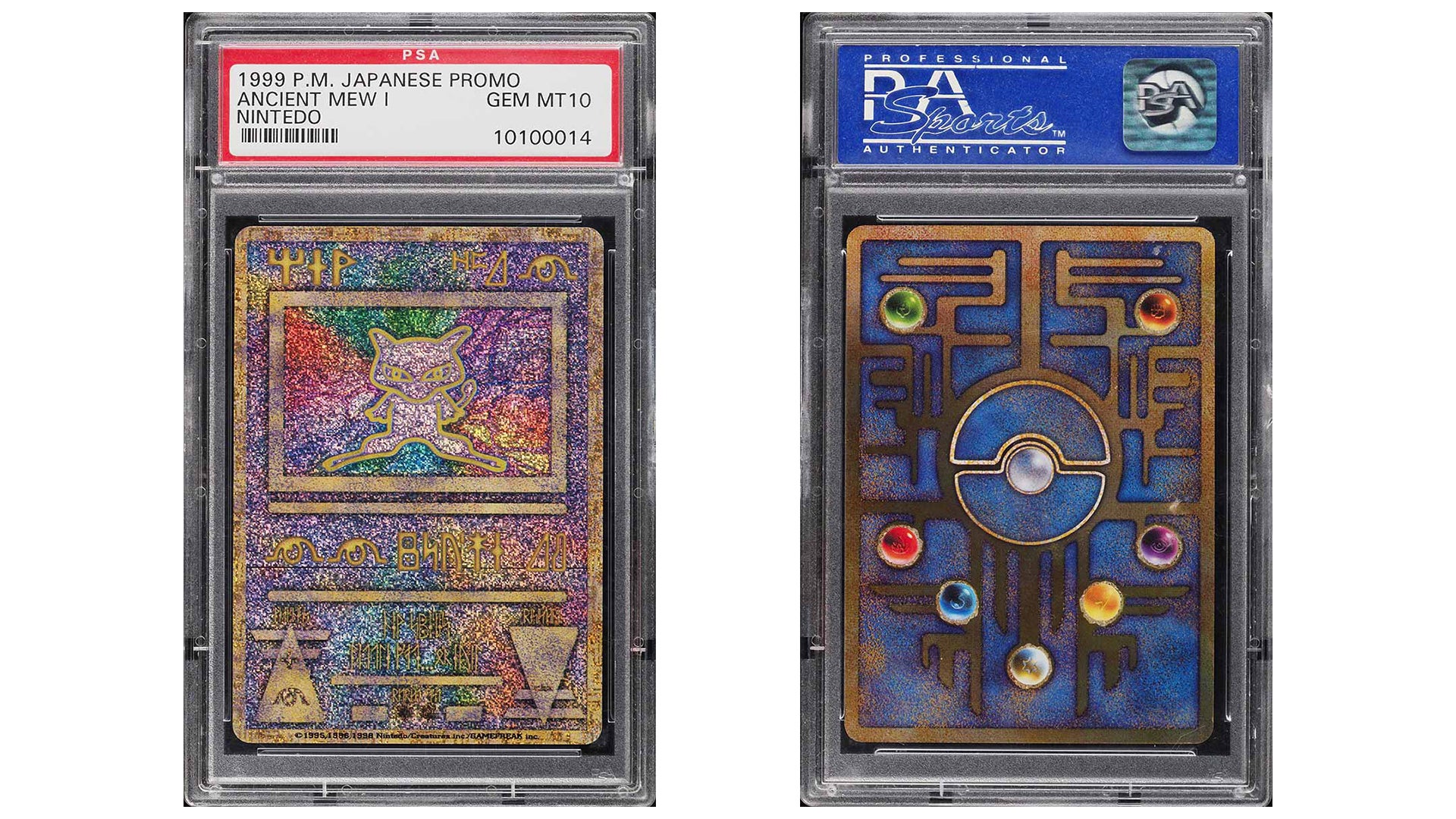 The iconic runic design of Ancient Mew. Source: Dicebreaker
The "Nintedo" Typo Explained
To understand how the biggest video game company in the world got its own name misspelled on one of its most famous promotional items, we have to look at the Japanese theatrical release of the second Pokémon movie, Revelation Lugia (known in the West as The Power of One), in July 1999.
The original Japanese Ancient Mew was distributed in a special promotional pamphlet. Because the card was designed to look like a mystical, ancient tablet, almost all of the text was written in a fictional runic language.
However, legally, the copyright information at the bottom of the card had to be printed in standard text—which is exactly where the monumental mistake happened.